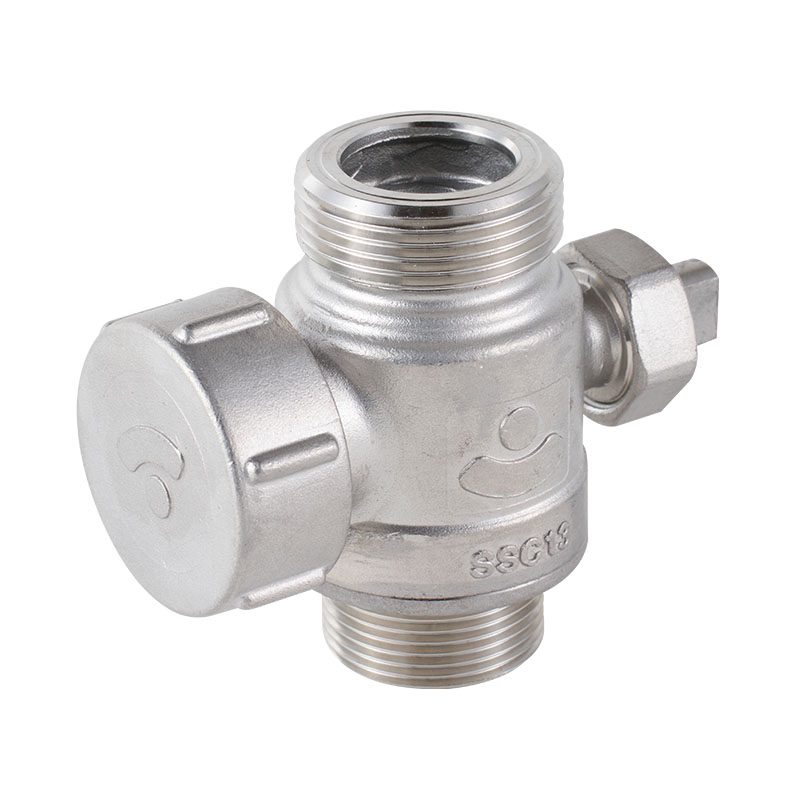
Look at any industrial piping system—oil refinery, water treatment plant, chemical processing line. Somewhere along that maze of pipes sits a ball valve. A solid sphere with a hole through the middle, turned by a handle to start or stop flow. That ball started as something else: a rough casting, poured from molten stainless steel. Behind every finished valve stands a stainless steel ball valve casting factory, a foundry that turns metal into the spherical shape that controls flow.
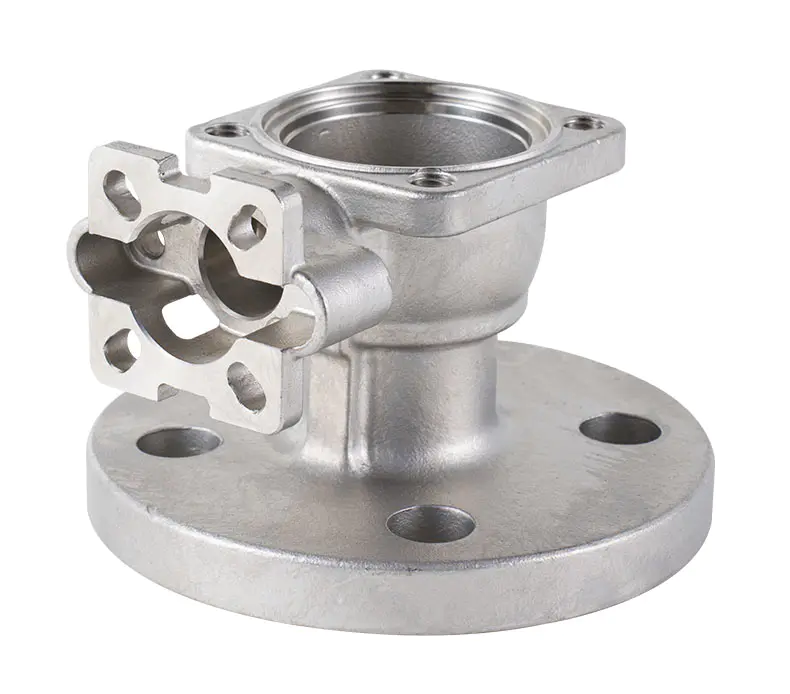
It's the rough form before machining
The casting comes out of the mold as a near-net shape—a sphere with a cylindrical stem attached. The hole through the center is partially formed. A stainless steel ball valve casting factory produces these castings with extra material on all critical surfaces, knowing that machining will remove the rest.
The material determines the application
CF8M (316 stainless) is the many common alloy for corrosive service. CF8 (304 stainless) is used for general purpose. A stainless steel ball valve casting factory selects the alloy based on the fluid being handled—acids, seawater, steam, or just water.
The casting must be sound
Any porosity, shrinkage, or inclusion in the casting becomes a leak path or a stress riser in the finished valve. A stainless steel ball valve casting factory controls the pouring process carefully to produce dense, defect-free castings.
It produces the smooth surface needed for sealing
The ball must seal against soft seats—PTFE or reinforced polymers—to prevent leakage. A rough surface would chew up the seats. Investment casting, with its fine surface finish, reduces the machining needed. A stainless steel ball valve casting factory uses the lost-wax process to achieve a surface that's ready for final grinding.
It holds the spherical shape
The ball must be round. Investment casting holds tight dimensional tolerances. A stainless steel ball valve casting factory can cast the ball with the stem in place, eliminating a weld or press-fit joint.
It works for the full size range
From ½-inch ball valves to 12-inch industrial units, investment casting scales. A stainless steel ball valve casting factory runs small parts in clusters and large parts individually.
Wax injection
A wax pattern is made in the shape of the finished ball and stem. The pattern is slightly oversized to account for metal shrinkage during cooling. A stainless steel ball valve casting factory injects wax at the right temperature and pressure to avoid voids.
Shell building
The wax pattern is dipped in ceramic slurry, then coated with fine sand. The process is repeated until a thick shell forms. A stainless steel ball valve casting factory typically builds 6 to 8 layers for a durable mold.
Wax removal and firing
The shell is heated to melt out the wax, then fired at high temperature to harden the ceramic. A stainless steel ball valve casting factory controls the firing schedule to prevent cracking.
Pouring the stainless steel
Molten stainless is poured into the pre-heated shell. The metal fills the cavity, taking the shape of the original wax pattern. A stainless steel ball valve casting factory monitors pouring temperature and speed to avoid cold shuts or misruns.
Shell removal and cutoff
After cooling, the ceramic shell is broken away. The gate—the metal that filled the pour cup—is cut off. A stainless steel ball valve casting factory then does a visual inspection for gross defects.
The spherical sealing surface
The ball's OD must be as close to round as possible. A stainless steel ball valve casting factory uses core pins to form the through-hole and controls shrinkage to maintain roundness. Irregularities are ground out during machining.
The stem integration
The stem must be cast integrally or welded on. Cast-in stems eliminate a potential leak path. A stainless steel ball valve casting factory designs the stem junction with a generous radius to avoid stress concentration.
The drive flat or slot
The top of the stem is cast with a flat or broached slot for the handle or actuator. A stainless steel ball valve casting factory includes this feature in the wax pattern.
The through-hole
The hole through the ball must align with the stem axis. A stainless steel ball valve casting factory uses core pins that are precisely positioned and secured.
CF8M (316 stainless)
Molybdenum adds resistance to chlorides and acids. Used in chemical plants, marine applications, and food processing. A stainless steel ball valve casting factory pours this for many industrial customers.
CF8 (304 stainless)
Good general corrosion resistance. Used for water, steam, and mild chemicals. A stainless steel ball valve casting factory offers this for lower-cost applications.
CN7M (Alloy 20)
Resists sulfuric acid and other aggressive chemicals. A stainless steel ball valve casting factory pours this for specialty applications.
Shell integrity
A cracked or porous shell creates fins and surface defects. A reliable factory inspects shells before pouring and repairs small cracks.
Pouring control
Temperature must be correct for the alloy. Too cold and the metal doesn't fill. Too hot and the surface reacts with the ceramic. A good stainless steel ball valve casting factory tracks and logs every pour.
Shrinkage management
Stainless shrinks as it cools. The wax pattern must be oversized by the right amount. A serious factory uses computer simulation or historical data to predict shrinkage.
NDT capability
Porosity and inclusions are common in castings. A good stainless steel ball valve casting factory offers X-ray or dye penetrant inspection to detect defects.
Finish machining integration
Some factories send castings to a machine shop. Others do both. A stainless steel ball valve casting factory that coordinates with machine shops delivers parts that meet final specs faster.
A stainless steel ball valve casting factory produces the spherical component that controls flow in industrial piping. The good ones use investment casting for surface finish and dimensional accuracy. They pour CF8M, CF8, and specialty alloys. They control shell quality, pouring temperature, and shrinkage. The result is a casting that machines cleanly, seals tightly, and holds pressure for years. Choose a foundry that treats every ball as a precision component, not just a rough pour.